

Dust formation is an inevitable process in the operation of any enterprise, but it can become a source of serious risks, especially when it comes to combustible materials. The uncontrolled accumulation of combustible dust creates a risk of explosions and fires that can have devastating consequences. This necessitates the development and implementation of effective measures to prevent such incidents.
How and Where Does Dust Form?
Dust consists of solid particles ranging in size from a few micrometers to millimeters that can remain suspended in the air.
Combustible dust is particles that can ignite and sustain combustion when in contact with an ignition source, creating a risk of fire and detonation.
Virtually every industry has risks associated with combustible dust environments. The most common sources of fine particles are the following materials:
- Coal, wood.
- Flour, starch, sugar, cocoa, powdered milk.
- Metals: aluminum, magnesium, titanium.
- Plastics, rubber, dyes, fertilizers, pesticides.
- Pharmaceutical substances.
- Cotton, flax, wool, synthetic fibers.
In industrial enterprises, dust formation is the result of various production processes and can pose a serious safety hazard.
The main sources of combustible dust formation in production:
- Mechanical processes: grinding, crushing, grinding, cutting, drilling, milling, dosing, and separation of materials.
- Chemical processes: drying and extraction of materials, chemical reactions leading to the formation of solid products.
- Production processes: loading and unloading of powders, their transportation, processing, mixing, and packaging.
How Fast Does Dust Accumulate and How Long Does It Take to Form?
Suspension forms almost instantly during the process that creates it. For example, when grinding material, particles arise at the moment of contact between the abrasive tool and the surface. When transporting bulk material, suspension forms at the moment of movement and contact between particles.
It is impossible to say unequivocally how quickly powders accumulate, as this is determined by a combination of factors: the intensity and type of dust-forming processes, the effectiveness of dust removal, the quality of ventilation, and general cleanliness standards.
Factors affecting the rate of dust accumulation:
- The intensity of dust-generating processes.
The higher the speed of processing or transporting raw materials, the more dust is generated and the faster it accumulates. - The efficiency of dust removal and aspiration systems.
The presence and operability of aspiration systems significantly reduce the likelihood of particle accumulation. - Frequency and quality of cleaning.
Regular and thorough cleaning, for example, using industrial vacuum cleaners, prevents the spontaneous accumulation of particles. - Materials and processes.
Some materials and processes produce more dust than others. For example, processing softwood can create more dust than processing metal. - Humidity.
Higher humidity can slightly reduce the rate of particle accumulation by promoting settling.
The highest risk of fire or explosion exists in areas where critical amounts of combustible dust accumulate. These include:
- Near sources of dust generation.
Material processing areas (grinding, cutting, crushing), places where materials are manually spread and transferred. - Inside equipment.
Hoppers, silos, conveyors, bucket elevators, dust collectors, ventilation ducts, filters, pneumatic transport systems. - Horizontal surfaces.
Pipes, beams, shelves, upper parts of equipment. - Hard-to-reach areas.
Corners, areas behind equipment.
The accumulation of combustible dust greatly increases the likelihood of accidents and poses a serious threat to the safety of personnel and equipment.
Why Is Dust Accumulation Dangerous?
The accumulation of particles, especially combustible ones, poses a serious danger to businesses and people. High concentrations of dust in indoor spaces can negatively affect the health of employees, causing respiratory diseases. However, the most destructive threats posed by the accumulation of combustible dust are explosions and fires.
|
Fire |
Explosion |
|
Combustible dust ignites easily from a spark or overheating. The flame spreads quickly across the surface and poses a threat of a large-scale fire. |
In a confined space, suspended combustible dust mixes with air to form an explosive mixture. The appearance of an ignition source leads to deflagration and then detonation, accompanied by a sharp increase in pressure. |
Fires and explosions cause injuries and deaths, damage equipment and buildings, and lead to production stoppages.
The most serious danger is the detonation of explosive dust. The explosion spreads rapidly over a huge surface area of particles, instantly increasing the pressure and forming a shock wave.
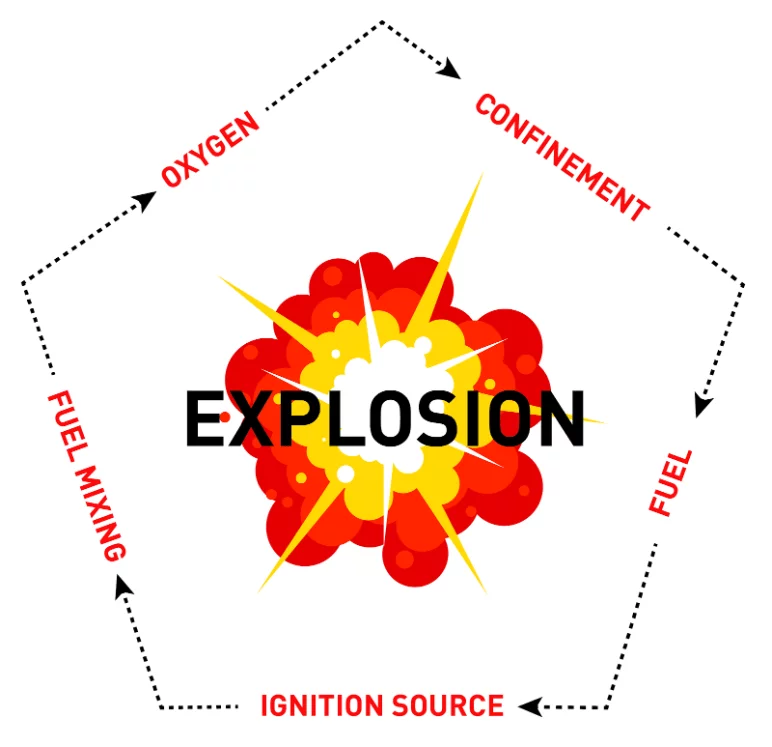
For a dust explosion to occur, five factors must be present simultaneously, forming what is known as the "explosion pentagon":
 |
|
- The presence of combustible powder.
The presence of combustible material in a finely dispersed state. - A confined space.
A closed space where dust can accumulate. - Initiation.
The presence of an ignition source. - Dust dispersion.
Uniform distribution of particles in the air, forming an explosive mixture. - Presence of an oxidizer.
For example, oxygen that supports combustion.
Over the past few years, many businesses around the world have faced the destructive force of dust explosions.
| Photo | Details |
|---|---|
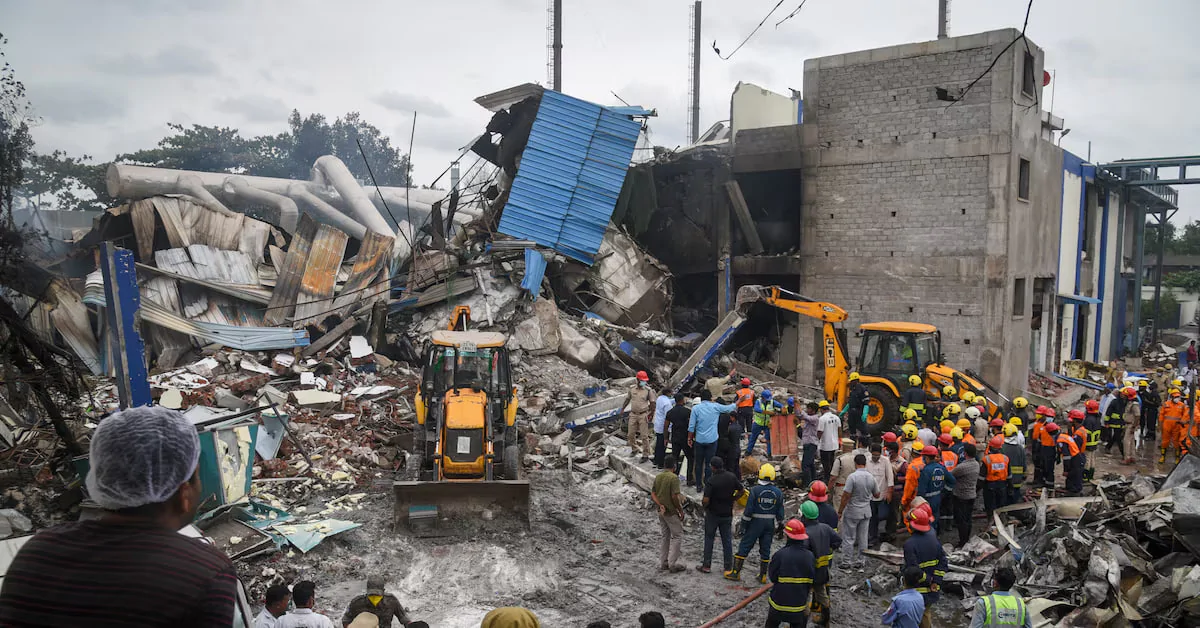 |
2025, India, Sigachi Industries Pharmaceutical Factory A dust explosion occurred in a facility designed for drying microcrystalline cellulose. Consequences: 36 dead, more than 30 injured. The factory building was completely destroyed. |
| 2025, Russia, Vtoraluminprodukt A metal dust explosion occurred during the technical start-up of the installation. The cause was an abnormal discharge from the cyclone. A similar incident occurred at the same enterprise in 2022. While the shredder was operating during metal processing, dust accumulated on the equipment, followed by an explosion. Consequences: no one was injured. |
|
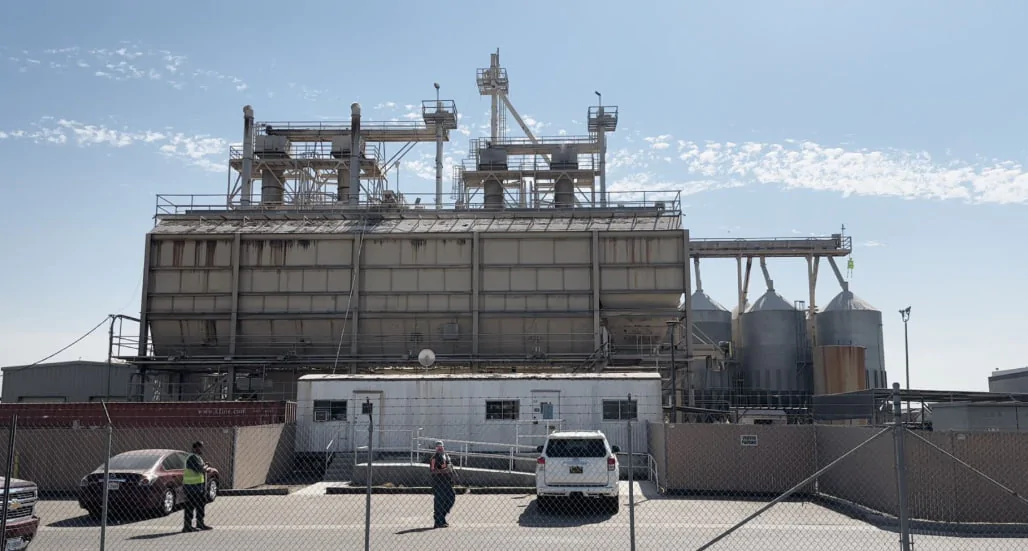 |
2024, the USA, Handford Grain Company
|
Why can metal dust be flammable?
Laboratory analysis of dust for explosion hazard is necessary for a comprehensive assessment of potential risks at enterprises where explosive atmospheres may form. The data obtained allows not only to select explosion-proof and explosion-protected equipment, but also to optimize dust removal and ventilation systems, develop safe working procedures, and minimize the likelihood of fires and explosions.
5 stages of laboratory testing of combustible dust:
- Free consultation. Discussion of the goals and characteristics of your production with ATEX.CENTER specialists.
- Sample collection and shipment. Using the instructions provided, collect dust samples and send them to the laboratory.
- Laboratory testing. Determination of dust explosion hazard parameters.
The ATEX.CENTER team determines the following key parameters of the explosion hazard of solid particles:
Kst
Explosion hazard index
MIE
Minimum Ignition Energy
dP/dTmax
Explosion pressure rise rate
ST1, ST2, ST3 explosion class
MIT
Minimum Ignition Temperature
Pmax
Maximum explosion pressure
LEL (Lower Explosive Limit) and UEL (Upper Explosive Limit)
- Report and recommendations. Provision of a test report with conclusions on the explosion hazard of dust samples and recommendations for explosion protection.
- Solutions for explosion protection. Our experts will select explosion protection systems suitable for your specific production.
Analysis of the explosion hazard of solid particles is a necessary condition for the safe operation of enterprises with dust-generating processes, allowing you to avoid catastrophic consequences, protect personnel, and reduce financial and reputational risks.
How to Minimize Dust Hazards
Effective management of combustible dust explosion risks requires a comprehensive approach combining organizational and technical measures.
Technical measures include:
- Installation of effective aspiration (dust removal) and ventilation systems, as well as their regular maintenance.
- Preventing the emergence of ignition sources.
- Grounding of equipment
- Protecting equipment from overheating.
- Prohibition of open flames, etc.
- Installation of explosion protection systems.
- Explosion localization systems (B-FLAP, GATEX, HRD barrier). This equipment is designed to cut off the explosion and prevent the spread of flames and excess pressure between units of technological equipment.
- Explosion suppression systems (HRD system). The principle of operation of this device is based on the instantaneous introduction of an explosion-suppressing substance (sodium bicarbonate) into the protected technology. This reduces excess pressure and stops the explosion from developing further.
- Explosion release devices (rupture discs, VMP and Vent PRO S explosion venting panels), flameless explosion release devices (FLEX flame arresters). These devices enable controlled release of excess pressure during an explosion. Bursting discs and panels are suitable for outdoor use where there is sufficient space for safe explosion venting. FLEX flame arresters can be used indoors where safe venting is not possible and it is necessary to contain flames, combustion products, and temperature.
Organizational measures include:
- Training and instruction of personnel, regular professional development.
- Development and approval of instructions for safe work practices, cleaning of premises, and equipment maintenance.
- Organization of regular cleaning of premises and equipment, introduction of industrial vacuum cleaners.
In the absence of data on the explosion hazard of dust present in production, it is recommended to conduct a qualified laboratory analysis. This stage is necessary for the development of effective solutions to ensure protection against incidents in the field of explosion safety.
Conclusion
Monitoring the accumulation of powders, especially combustible ones, is necessary to prevent accidents at enterprises. Dust accumulation increases the risk of explosions and fires and can also lead to material losses and personnel injuries. A competent comprehensive approach includes not only regular cleaning and the installation of effective aspiration systems, but also the analysis of dust explosion hazards, as well as the development and implementation of appropriate protective measures based on the results of dust testing and explosion hazard audits.