
Explosion venting
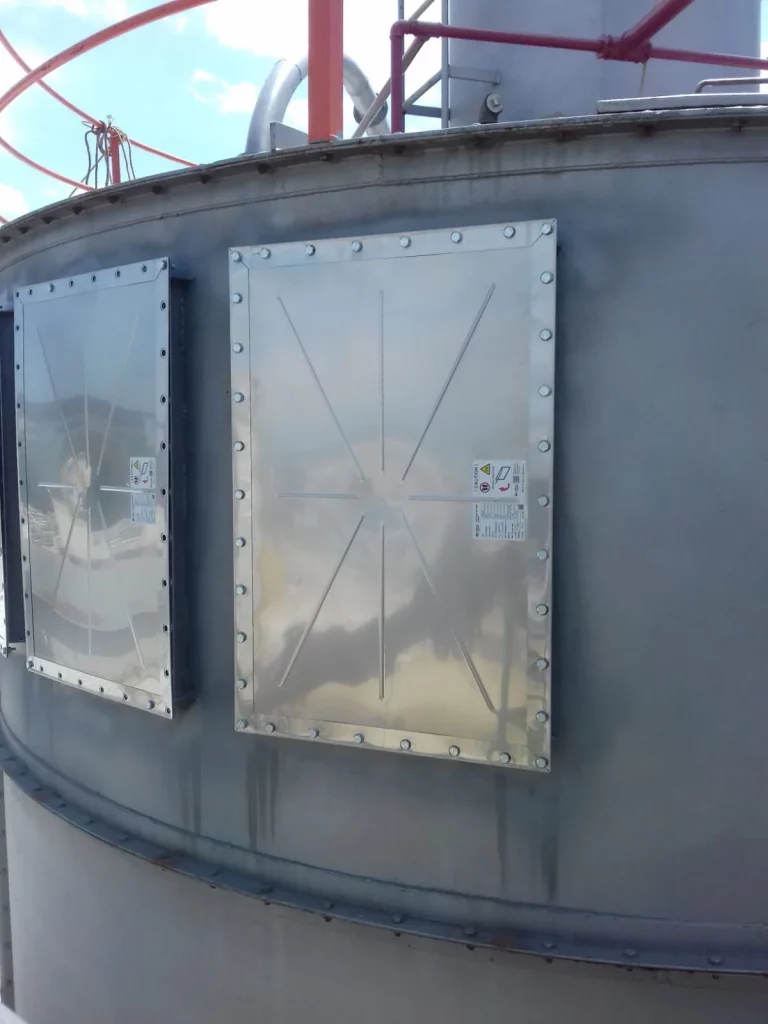
Explosion venting is a pressure relief method used to protect equipment and buildings from the effects of a deflagration (rapid combustion) by safely releasing the developing pressure through a dedicated venting device. It is widely applied in dust-handling processes (filters, cyclones, silos, elevators, mills) and in some gas/vapor applications, where an explosive atmosphere can form inside the equipment.
How the system works
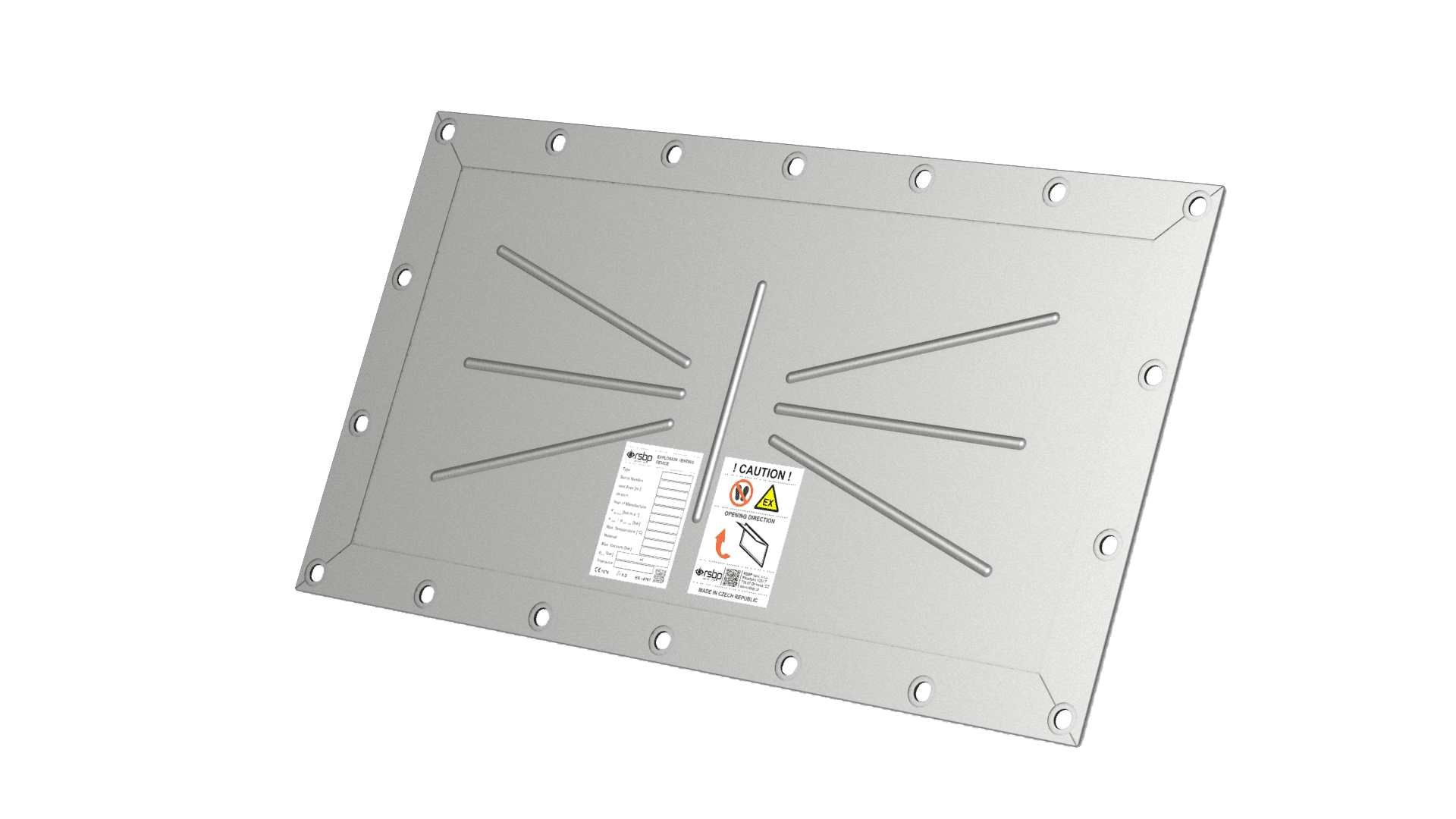
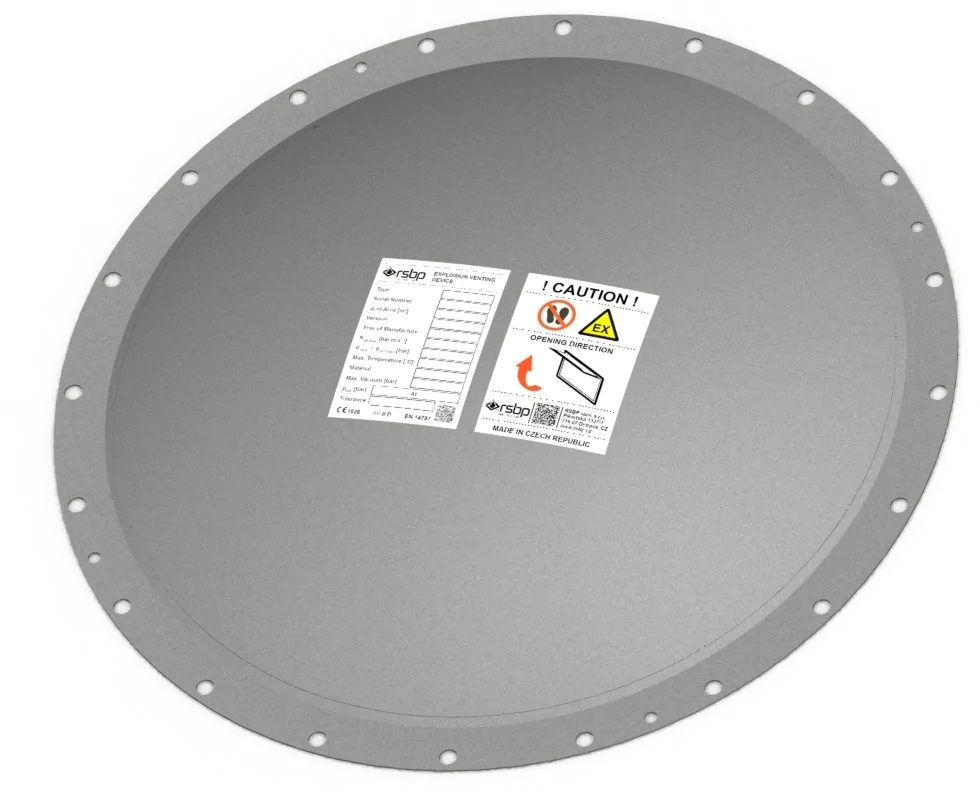
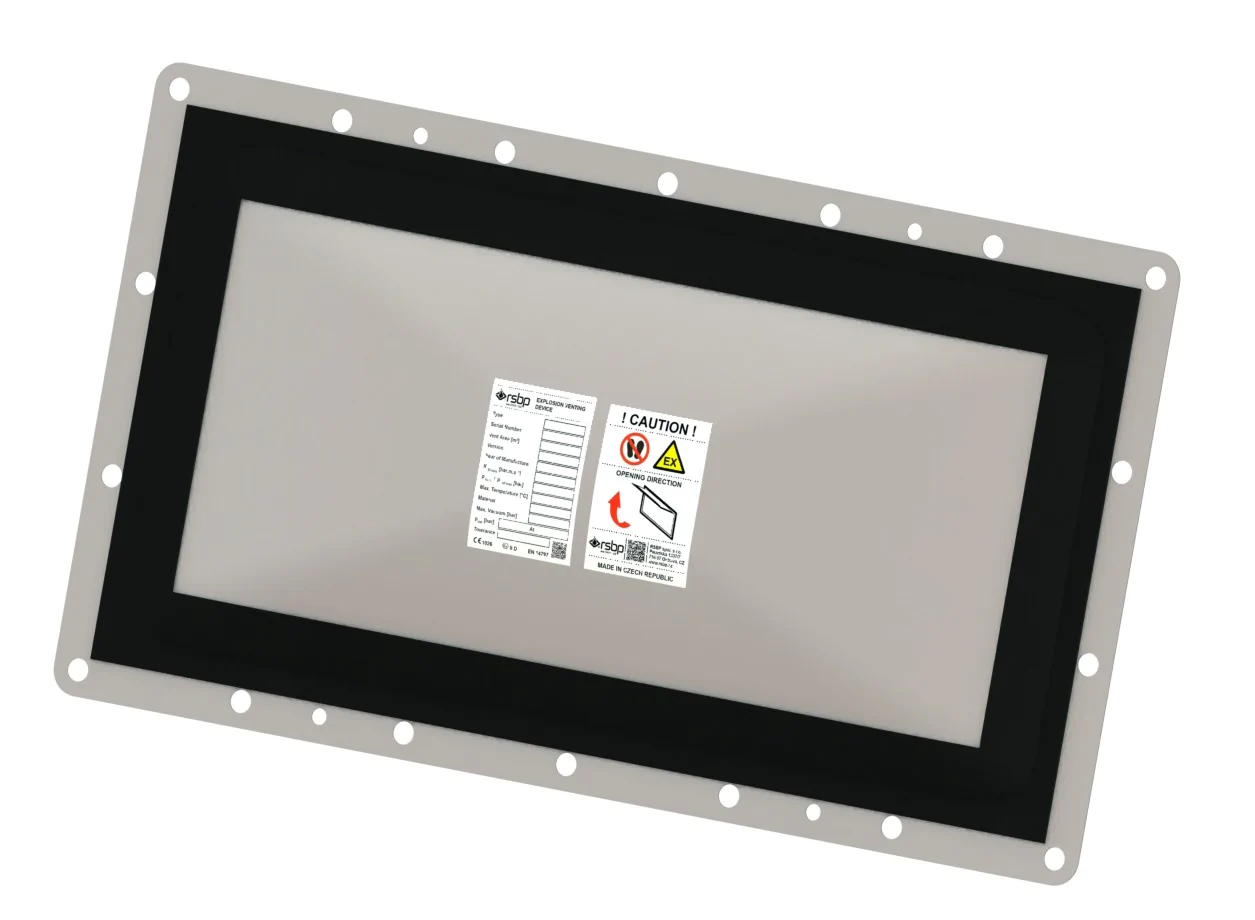
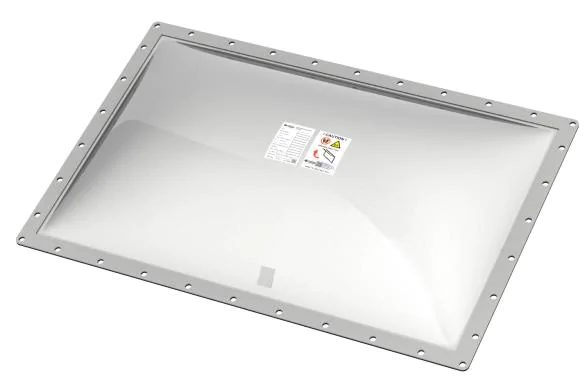
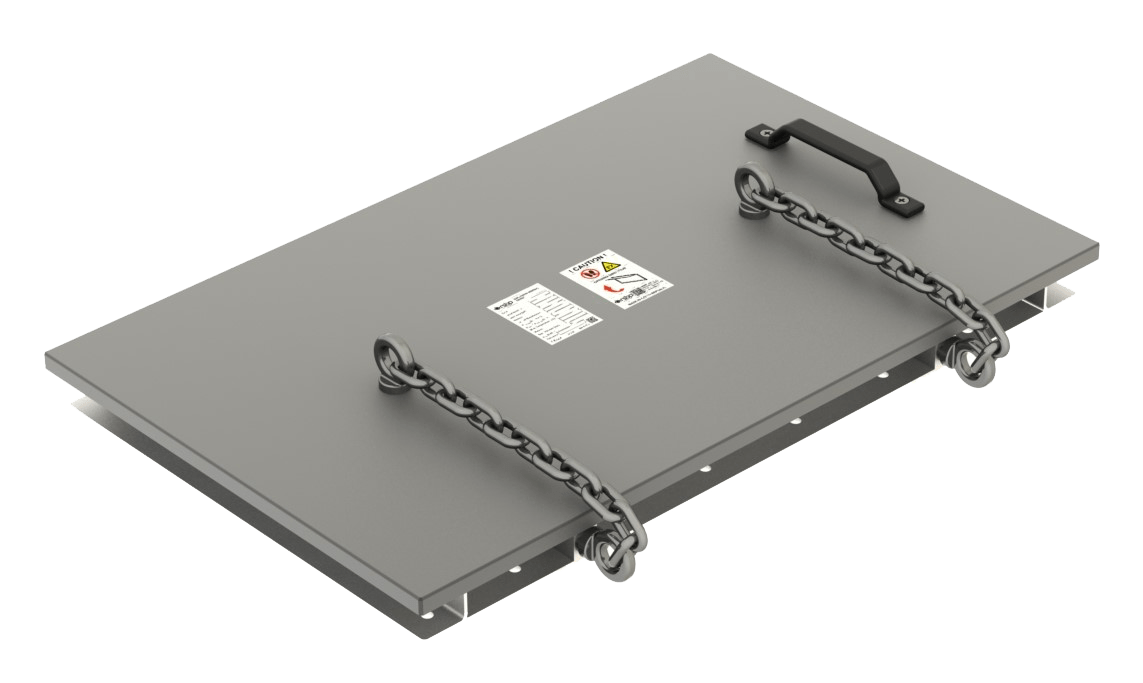
When ignition occurs, pressure rises within milliseconds. A properly selected explosion vent panel opens at a defined static activation pressure (Pstat) and creates a low-resistance opening so the pressure can escape. This limits the internal peak pressure and helps prevent catastrophic vessel rupture. The vented flow must be directed to a safe area, considering flame, pressure wave, and expelled product.
Outdoor venting vs indoor venting
-
Outdoor venting (standard vent panels) is the most common solution when the equipment can vent directly to a safe external zone.
-
Indoor venting requires control of flame and hot gases. In these cases, flameless venting devices are used to reduce flame emission and make venting possible inside buildings (subject to site risk assessment and applicable standards).
Key parameters for selecting venting panels
To select the correct venting device and vent area, the following inputs are critical:
-
Explosivity data of the material (e.g., Kst and Pmax for dust) and the process media characteristics
-
Vessel geometry and volume (filter, silo, cyclone, duct section) and installation location
-
Static activation pressure (Pstat) and required reduced explosion pressure Pred
-
Strength of the protected equipment (maximum allowable pressure, reinforcement, mounting surface)
-
Process conditions: operating pressure/vacuum, temperature, humidity, sticky or fibrous dust, corrosion
-
Venting configuration: ducted/unducted venting, vent duct length and bends, back pressure effects
-
Site constraints: safe vent discharge area, personnel zones, surrounding structures, and possible secondary hazards
Standards and compliance
Explosion venting design and selection must follow the relevant regulations and standards for explosive atmospheres and protective systems. In ATEX applications, the venting device and its installation should be aligned with the applicable directives and harmonized standards, and supported by complete technical documentation and traceability.
Typical mistakes we help you avoid
-
Using a vent panel with an incorrect Pstat or insufficient vent area
-
Installing the panel on a weak mounting surface or with non-approved gaskets/fasteners
-
Designing long or restrictive vent ducts that significantly increase Pred
-
Venting into unsafe zones or near building openings, walkways, or ignition sources
-
Ignoring process vacuum, condensation, corrosion, or product build-up that affects opening behavior
Engineering support
ATEX.CENTER supports selection of explosion venting components and documentation for projects, including:
-
equipment data review and venting concept (outdoor / flameless indoor)
-
selection of suitable vent panels and accessories
-
integration recommendations and installation guidance
-
documentation package for procurement and compliance
If you need a fast selection, send equipment type, dimensions/volume, media (dust/gas), process pressure/vacuum and temperature — we will recommend a configuration and provide a quotation.