

Any industrial facility working with gases and liquids is exposed to the risk of excessive pressure occurring in process equipment. Uncontrolled pressure increase can lead to equipment failure or destruction. Rupture discs provide an effective solution — due to their design and characteristics they ensure instantaneous pressure relief, minimizing potential damage to equipment.
What Is a Rupture Disc and How Does It Work
A rupture disc is a non-reclosing safety device designed to protect equipment and pipelines from overpressure. It is a thin membrane that bursts instantly when a predetermined pressure level in the system is reached.
Depending on operating conditions, safety membranes can be manufactured from:
- Metal (steel, aluminum, nickel, etc.)
- Graphite
- Polymeric materials (such as PTFE)
When a Rupture Disc Should Be Installed
Rupture discs are used in situations where other protection methods cannot provide sufficient reliability or response speed for pressure relief:
- During sudden pressure surges caused by uncontrolled chemical reactions or expansion of liquids or gases when heated
- When there is a risk of safety valve malfunction
- In processes involving aggressive substances
- Where high discharge capacity during emergency pressure relief is required
- In systems where leakage of the working medium is unacceptable
- Under extreme temperature conditions — both high and low
Types of Rupture Discs
By operating mechanism, rupture discs are divided into three types:
|
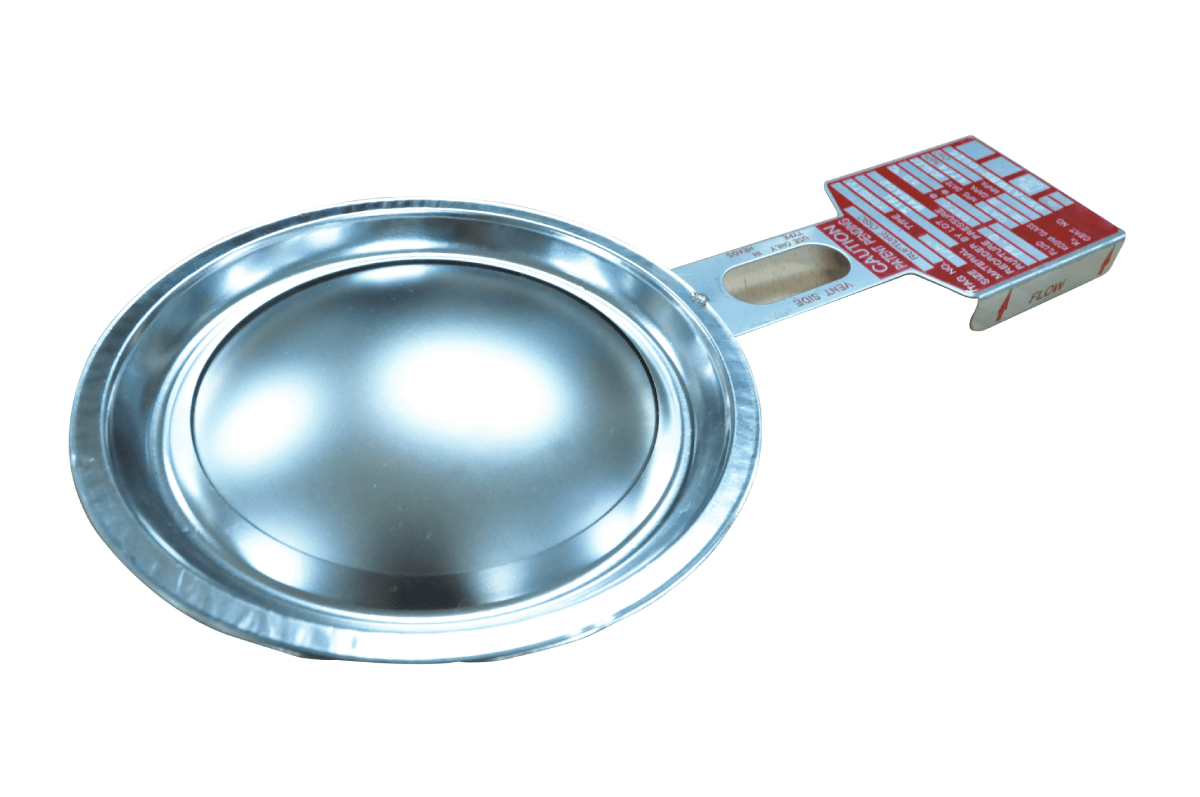
Forward acting. Rupture occurs due to pressure applied to the convex side of the disc. |
|
|
KSRST Forward Dome Tension Flat Seat Type Set Pressure 15 ~ 1500 kg/cm2 Temperature max 593℃ Producer: FDC Co., Ltd. |
 |
|
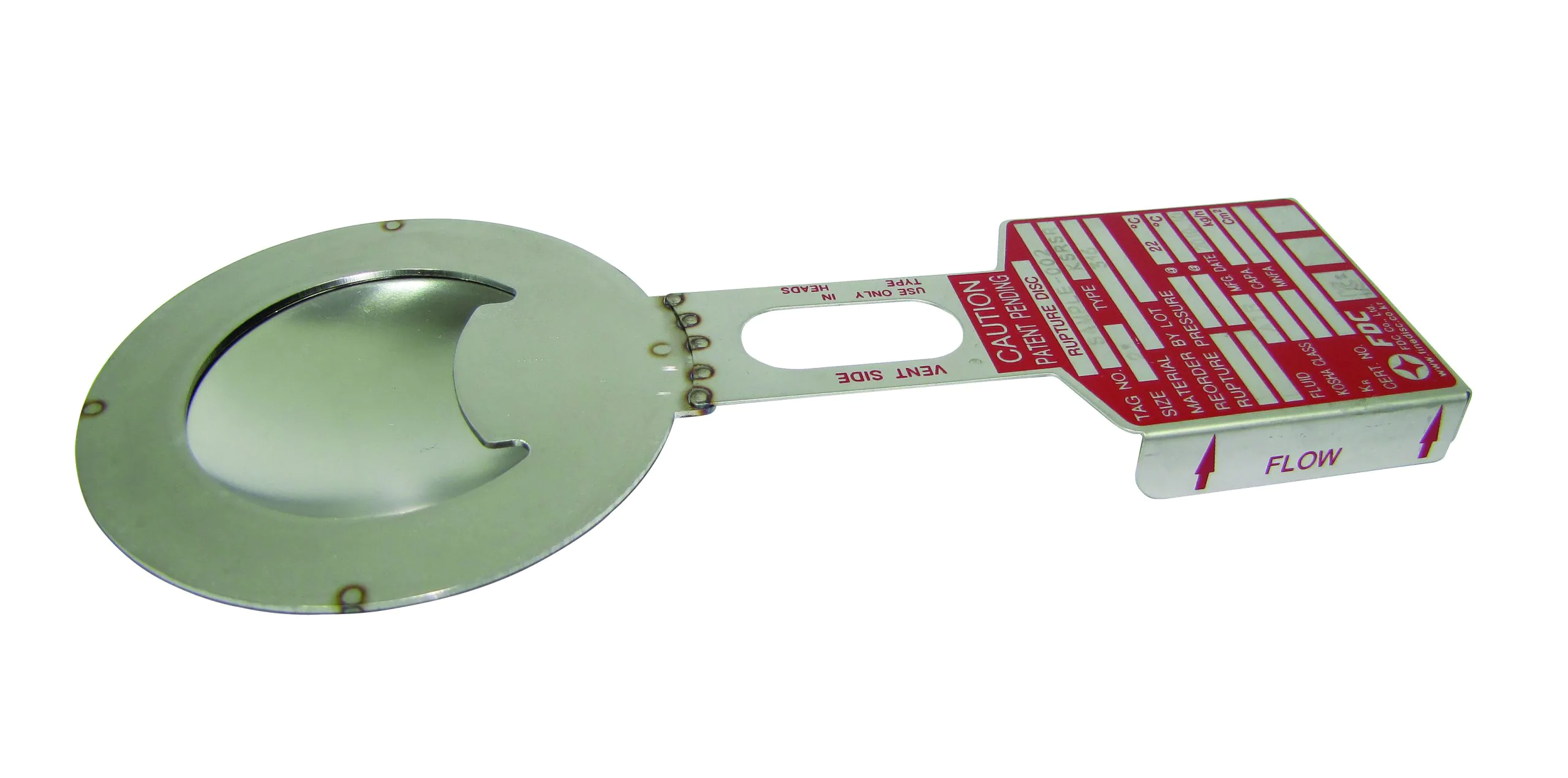
Reverse acting. Rupture occurs due to pressure applied to the concave side of the disc, often requiring a knife blade. |
|
|
KSRST Reverse Dome Scored Type Set Pressure 5 ~ 60 kg/cm2 Temperature max 593℃ Producer: FDC Co., Ltd. |
 |
|
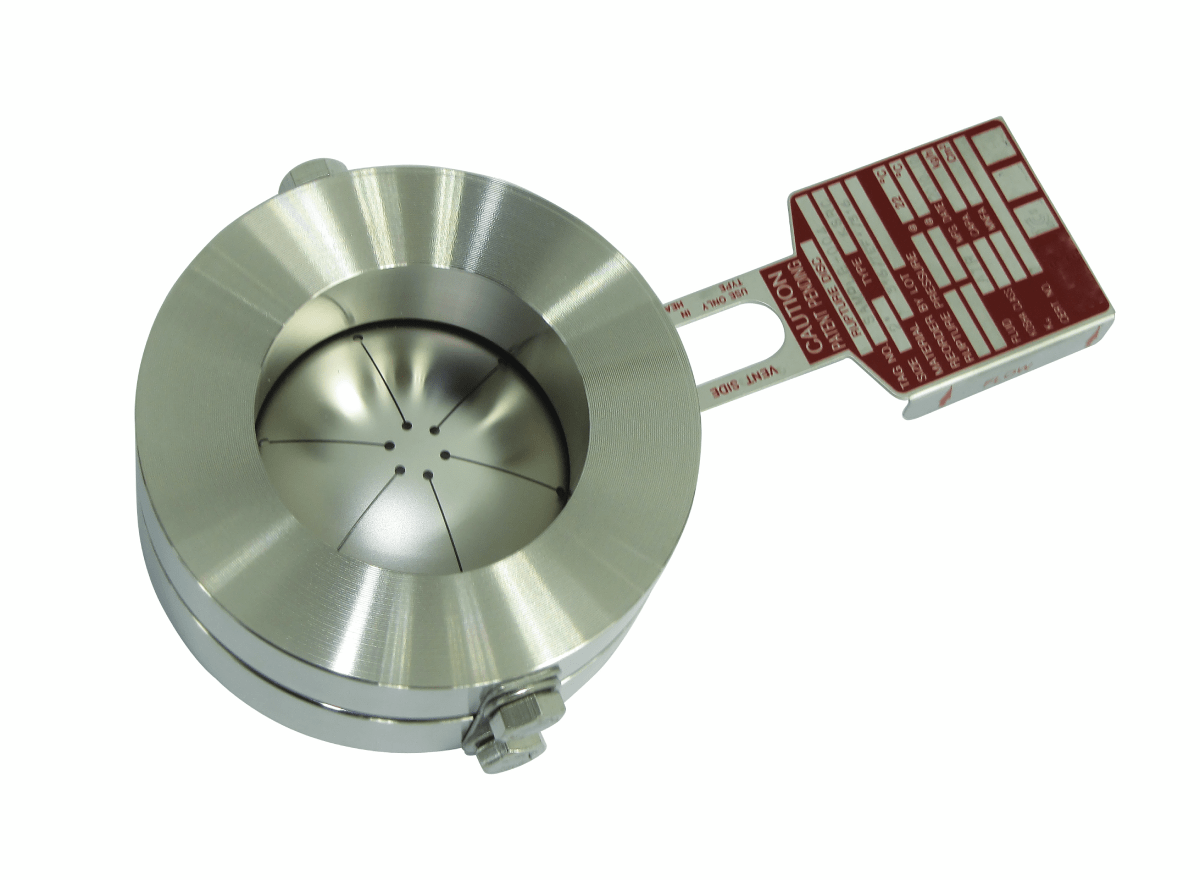
Double acting. Designed for pressure relief in both directions (overpressure and vacuum). |
|
|
KSRST Composite Dome Flat Seat Double Acting Type Set Pressure 0.05 ~ 50 kg/cm2 Producer: FDC Co., Ltd. |
 |
By shape, rupture discs are classified as dome-shaped (convex or concave) and flat. Dome-type safety membranes are suitable for high pressures, while flat discs are typically used for low pressures.
KSROComposite Flat Type for Flange Set Pressure 0.05 ~ 36 kg/cm2 Temperature max 482°C 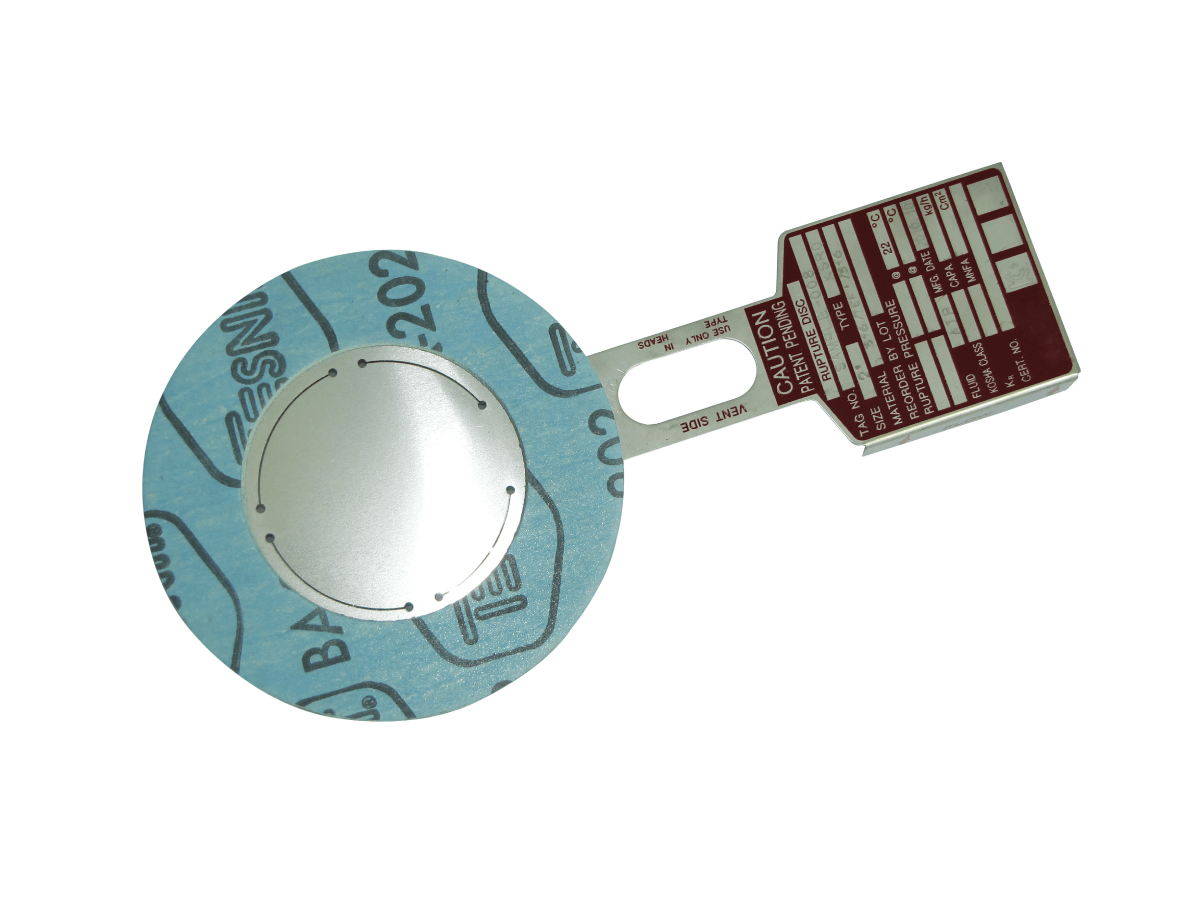 |
KSRCComposite Dome Sloped Seat Type Set Pressure 0.1 ~ 560 kg/cm2 Temperature max 482°C 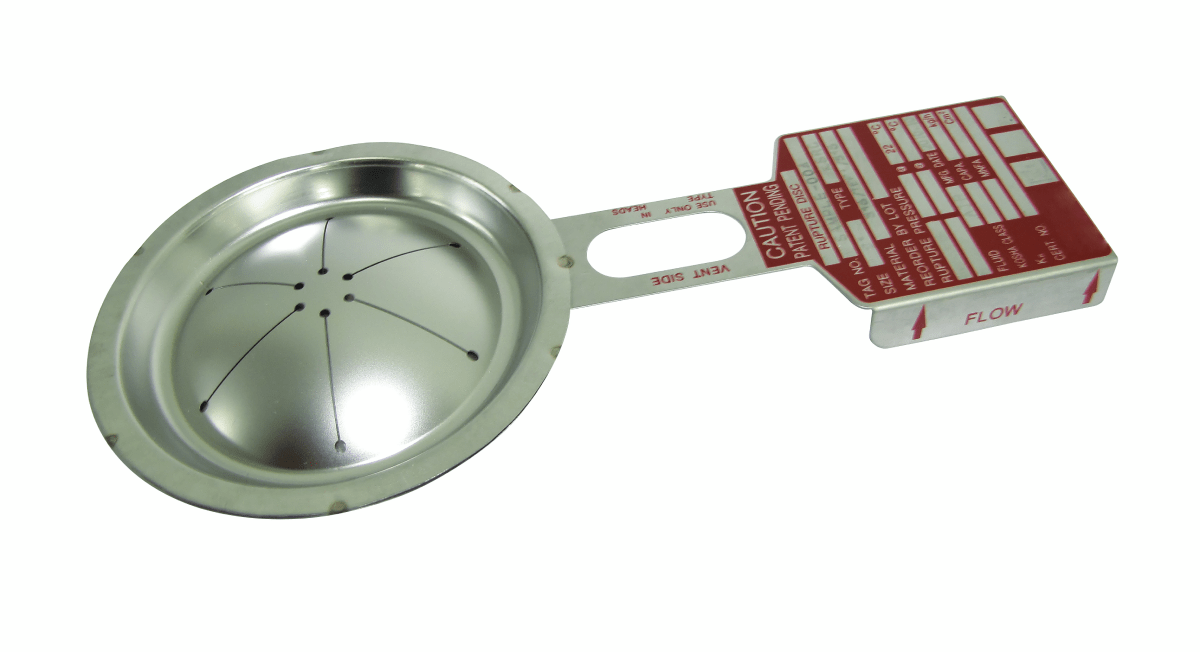 |
Depending on design and material, rupture discs are classified as metal, composite, or graphite.
According to purpose and specific characteristics, they may be designed for low and ultra-low pressure applications, sanitary processes, fragmenting or non-fragmenting types, and other specialized configurations.
A wide range of rupture discs makes it possible to select a solution that meets the specific requirements of each industrial application.
Advantages of Rupture Discs
Due to their unique characteristics, rupture disc safety devices provide high reliability and economic efficiency:
- Customizable and cost-effective. Design and materials are selected for specific applications.
- Reliable and efficient. Ensure accurate and instantaneous pressure relief with full discharge of the working medium.
- Universal. Suitable for virtually any medium, including highly aggressive environments.
- Leak-tight. Prevent leakage of the process medium before activation.
- Low maintenance. Rupture discs do not require regular maintenance.
Comparison of Rupture Discs and Safety Valves
| Comparison parameter | Rupture disc | Safety valve |
| Tightness | Provide complete leak-tight sealing | May allow minor leakage of the working medium |
| Resistance to aggressive media | Highly resistant | Susceptible to corrosion |
| Response speed | Instant activation | Requires time to open |
| Presence of moving parts | No moving parts | Spring, stem and valve components may wear out |
Standards and Certification
International certification of rupture discs ensures their reliability, safety, and compliance with the requirements of different markets and industries.
ASME Sec. VIII Div. 1.
This section of the American Society of Mechanical Engineers (ASME) Boiler and Pressure Vessel Code establishes requirements for the use of rupture discs to protect pressure vessels.
ISO 4126-2 to ISO 4126-6.
These standards define requirements for the design, manufacturing, testing, and marking of rupture discs, as well as other types of overpressure protection devices. In particular:
-
ISO 4126-2. Rupture safety devices — General requirements.
-
ISO 4126-3. Safety valves and overpressure protection devices with rupture discs.
-
ISO 4126-4. Pilot-operated safety valves.
-
ISO 4126-5. Controlled safety pressure relief systems (CSPRS).
-
ISO 4126-6. Safety devices actuated by non-mechanical forces.
API RP 520.
This Recommended Practice addresses the use of rupture discs in combination with safety valves or as an alternative to them.
KOSHA Safety Certification.
This certification confirms that rupture discs comply with safety requirements established by KOSHA and can be safely used within the territory of South Korea.
Conclusion
Reliable protection of equipment from overpressure is achieved through correct selection and installation of rupture discs in accordance with process conditions and technical standards. Proper selection ensures safe and stable operation of industrial processes.